Bookbinding Options Explained: Which Style Is Right for Your Print Project?
The way a book is bound can completely change the way a printed piece feels, opens and lasts. It might seem like a practical finishing detail, but it plays a big role in how your report, brochure, catalogue or report is used and remembered.
The right option depends on the page count, paper stock, budget, timeline and how the piece needs to function. Some books need to open flat. Some need to feel polished and professional. Others need to be sturdy enough to be kept, handled and revisited for years.
At Bambra, bookbinding is a big part of what we do in-house. Our experienced bookbinding team works across everything from books and binders to boxes and slipcases, bringing a hands-on, crafted finish to projects that need something a little more considered.
Saddle Stitching
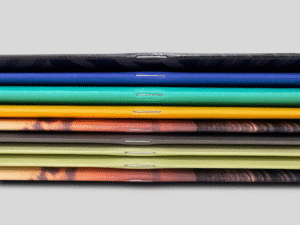
Saddle stitching is one of the most straightforward and economical binding methods. The pages are folded, nested together and secured through the spine with staples.
Best for: booklets, event programs, brochures, newsletters, school publications and thin publications.
Pros:
- Cost-effective
- Great for lower page counts
- Sits almost flat when open
- Works well for quick, practical printed pieces
Things to consider:
- Not suited to thicker books
- No printable spine
- Page count needs to work in folded sections
PUR Binding / Perfect Binding
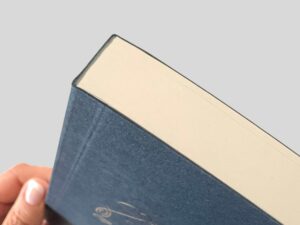
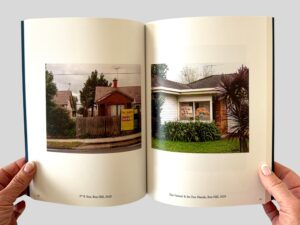
With PUR & Perfect binding, the pages and cover are glued together at the spine, creating a clean, square edge. It’s a popular choice when you want a polished finish without moving into section sewn binding. The difference between PUR & Perfect is the type of glue that is used – with PUR being the strongest.
Best for: softcover books, annual reports, catalogues, magazines, prospectuses and thicker brochures.
Pros:
- Clean, professional finish
- More economical than sewn or hardcover binding
- Allows for a printable spine
- Works well for medium to larger page counts
Things to consider:
- Doesn’t open as flat as section sewn or exposed spine binding
- Not ideal for very low page counts
- Paper stock and grain direction can affect how well it opens
Section Sewn Binding
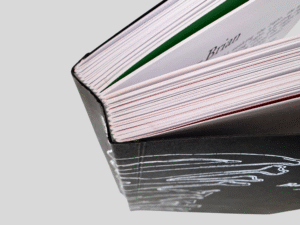
Section sewing is a traditional binding method where pages are folded into sections, sewn together, and then (generally) glued into a cover.
It’s a strong and durable option, often used for books that need to last, open well and feel more crafted.
Best for: art books, photography books, high-end publications, keepsake books, hardcovers and books with heavier use such as cook books
Pros:
- Strong and durable
- Works for both soft and hardcover format
- Opens flatter than perfect binding
- Great for books designed to be kept
- Works beautifully for image-heavy publications
Things to consider:
- More involved than perfect binding or saddle stitching
- Usually needs more production time
- Page count needs to be planned around sections
Singer Sewn Binding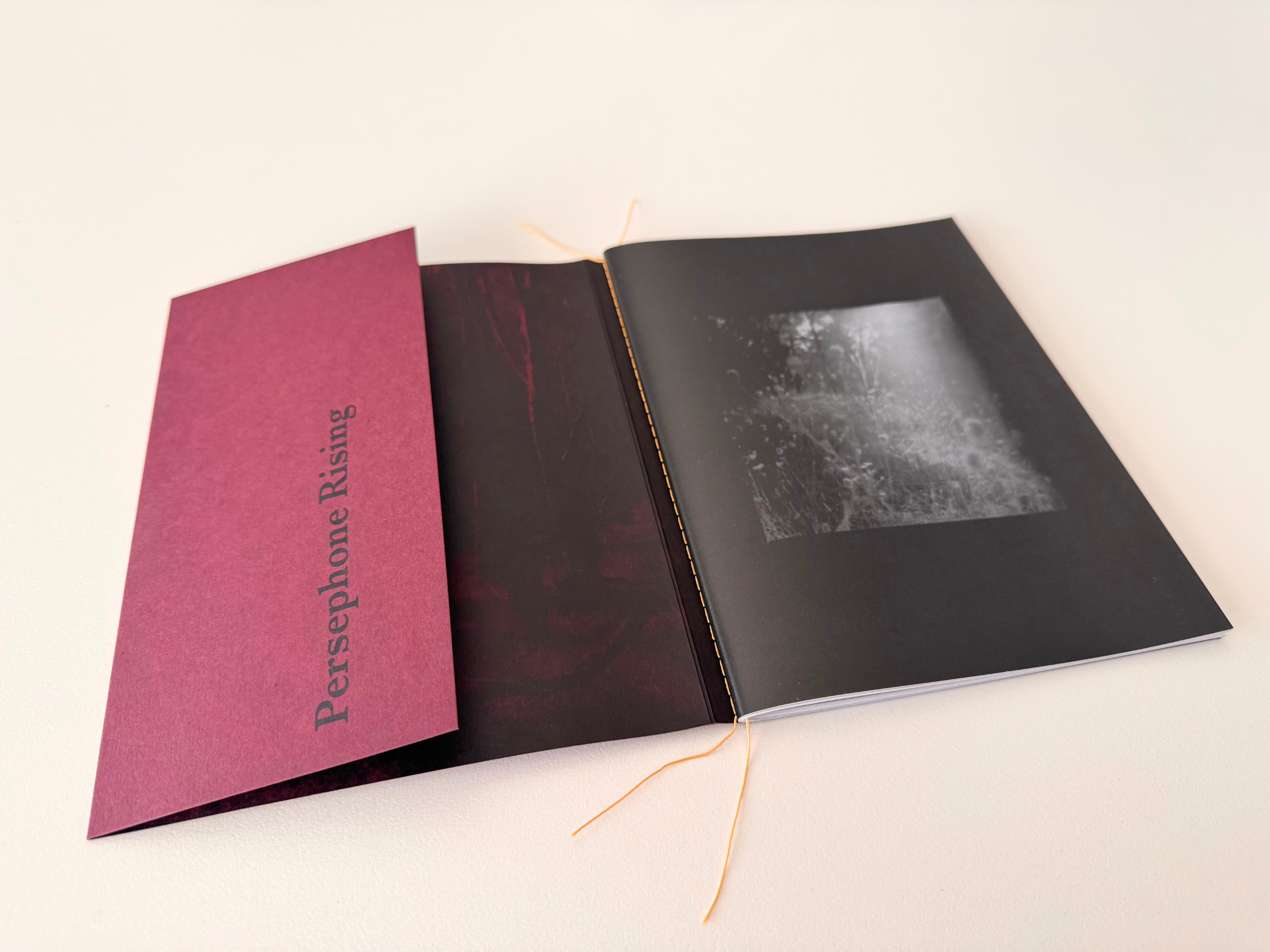
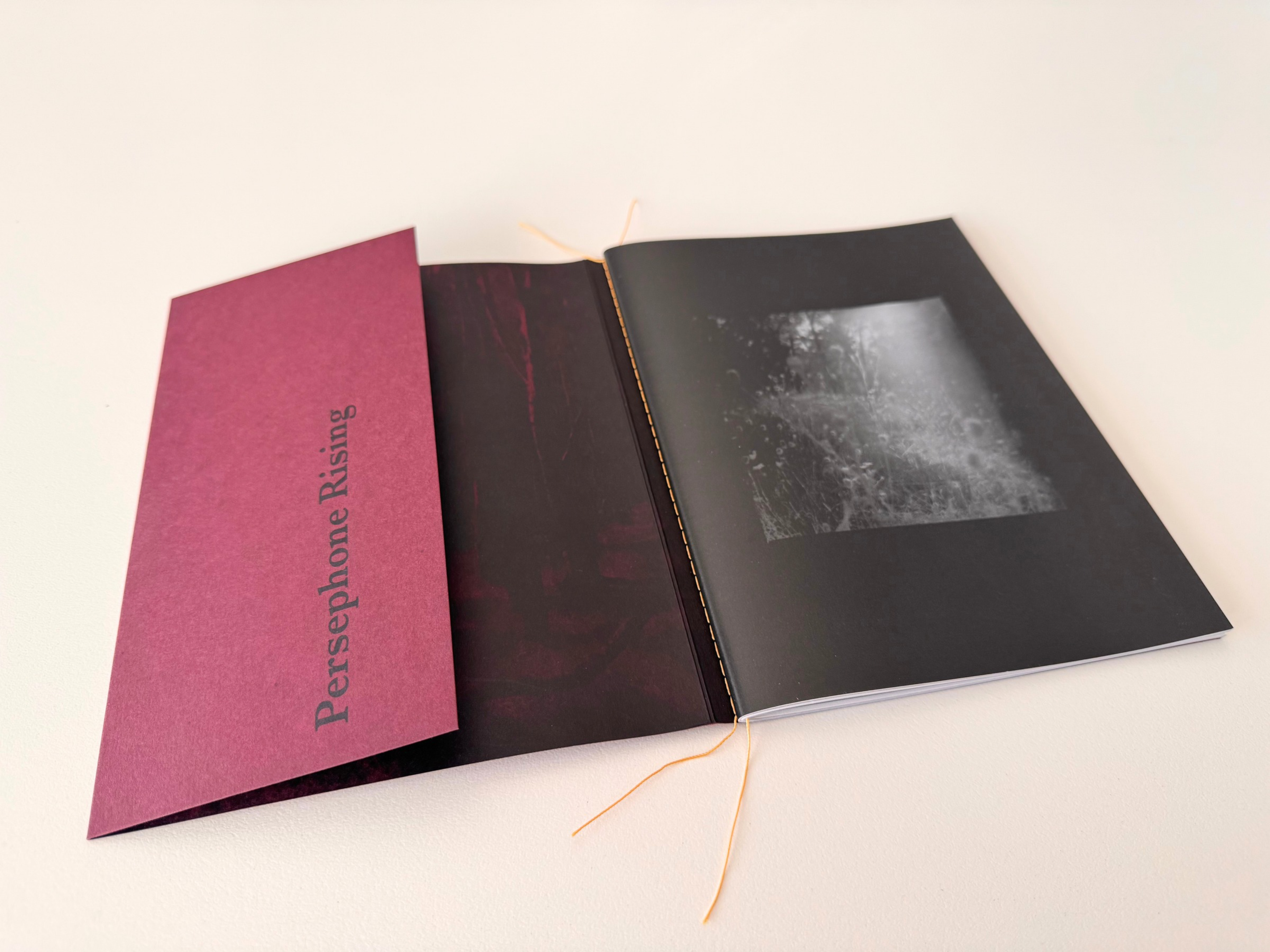
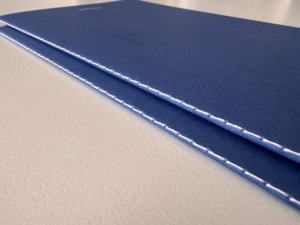
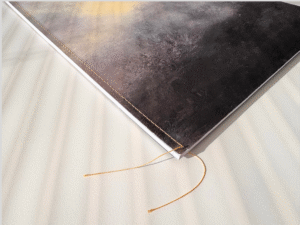
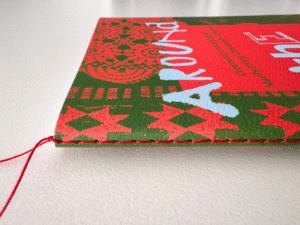
Singer sewing uses visible stitching, usually down the spine or through the cover, to hold the pages together.
It’s both functional and decorative, making it a great option when the binding is intended to be part of the design.
Best for: artist books, lookbooks, creative brochures, invitations, small publications and design-led pieces.
Pros:
- Adds a tactile, crafted detail
- Stitching can become part of the design
- Good for smaller page counts
- Thread colour can be chosen to complement the artwork
- Thread can be positioned down the outer spine or on the front cover
Things to consider:
- Not suited to thick publications
- The stitching is visible, so it needs to suit the design
- Page count and stock choice need to be considered carefully
Exposed Spine Binding
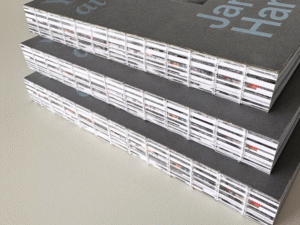
Exposed spine binding leaves the sewn sections visible along the spine instead of covering them completely.
It has a raw, crafted look and allows the book to open more freely, which can be useful for photography, artwork and layouts that run across a spread.
**Because every book is sewn and finished by hand, exposed spine binding has some natural characteristics and limitations to consider. We recommend talking to us early so you understand what to expect before choosing this binding style for your project**
Best for: photography books, art books, portfolios, creative publications and specialty print projects.
Pros:
- Opens flatter than many standard binding styles
- Creates a distinctive, crafted finish
Things to consider:
- Due to the handcrafted nature, artwork can be prone to movement along the spine area
- Glue seepage through sewing holes is not uncommon, causing pages to stick together
Case Bound Books
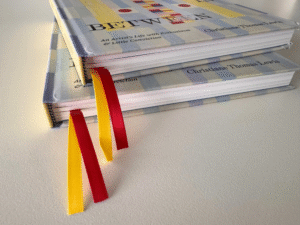
Case binding is used for hardcover books. The pages are bound together and attached to a hard cover, with options such as cloth, buckram, printed covers, foil, embossing or dust jackets. It’s also where our in-house bookbinding team can really help with the finer details such as cover materials, end-papers and embellishments.
It’s a durable option for books that are designed to be kept.
Best for: hardcover books, limited editions, art books, photography books, presentation pieces, corporate books and keepsake publications.
Pros:
- Strong and long-lasting
- Creates a high-quality hardcover finish
- Ideal for books with a longer shelf life
- Plenty of finishing options for the cover
Things to consider:
- More involved than softcover binding
- Longer production time
- Needs careful planning around cover materials, endpapers and finishing
Swiss Bound Books
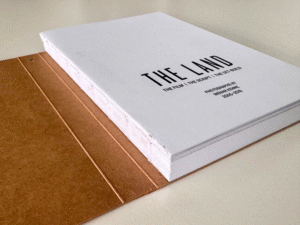
Swiss binding is a distinctive style where the book block is attached to the back cover, while the spine is left free.
This allows the book to open flat and gives the finished piece a considered, design-led feel.
Best for: design portfolios, artist books, photography books, brand books and high-quality publications.
Pros:
- Ability to open very flat
- Has a distinctive finish
- Great for design-led work
- Useful for spreads where the artwork needs to be seen clearly
Things to consider:
- More specialised than standard binding options
- Needs to be considered early in the design process
- Not suited to every type of publication
Not Sure Which Binding Style You Need?
That’s where working with a printer early can help. Page count, paper stock, grain direction, cover style and finishing can all affect which binding method will work best.
A simple school booklet might only need saddle stitching. A catalogue may be better suited to PUR binding. An artist book or photography publication might call for section sewing, exposed spine binding or case binding.
At Bambra, binding is never just the last step. It’s part of how the finished piece feels in someone’s hands.
If you’re planning a book, brochure, catalogue or special publication, we’re always happy to help you choose the right binding style for the job.
Latest News
Print, Touch and the Age of Digital Overload
Why Haptic Marketing Matters More Than Ever. We’re all a bit exhausted. Our inboxes are […]
Celebrating Craft at the 2026 National Print Awards
Earlier this month, we headed to Brisbane for the 2026 National Print Awards – an […]
Earl Translucent – The New Kid in Town
Meet Earl Translucent 110gsm Earl (a paper range exclusive to Bambra) has been a bit […]
What is a Cameo?
In bookbinding, it’s often the smaller details that elevate a cover. A cameo is one […]